
Hello world!
Welcome to WordPress. This is your first post. Edit or delete it, then start writing!
Read More →
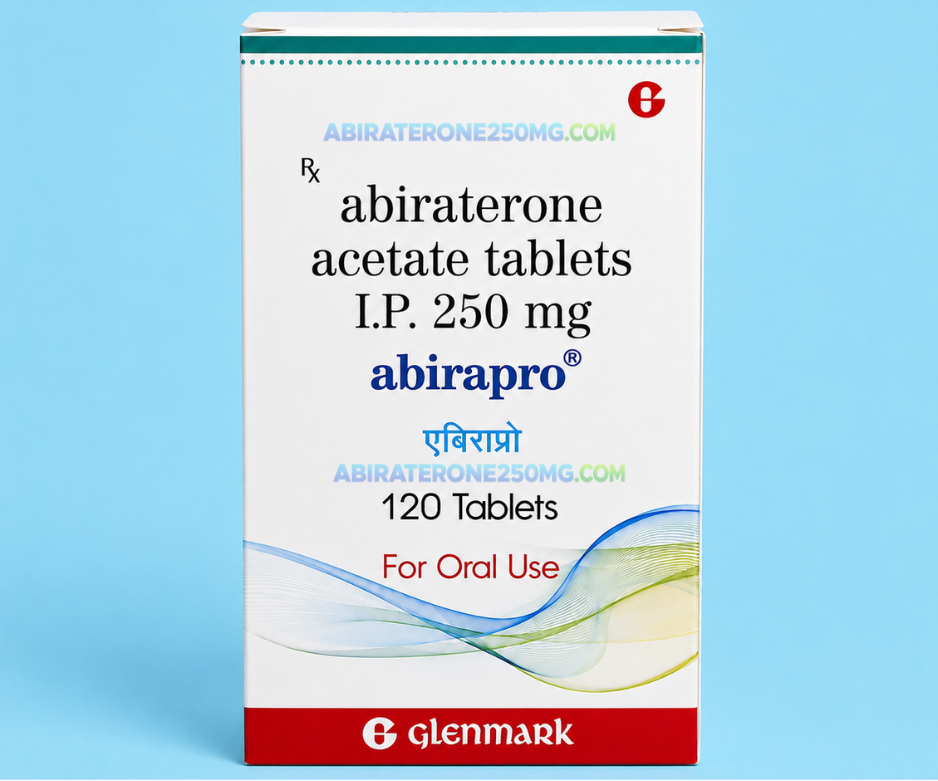
Abirapro 250 mg is identified on this website as a pharmaceutical product containing abiraterone acetate 250 mg. Product information from Glenmark identifies Abirapro 250 mg as a tablet containing abiraterone acetate and associates the product with Glenmark Pharmaceuticals Ltd.
Abiraterone acetate is an oral androgen-biosynthesis inhibitor used in combination with corticosteroid therapy for specified forms of advanced or metastatic prostate cancer. After administration, abiraterone acetate is converted to abiraterone, the active substance that inhibits CYP17A1, an enzyme involved in androgen production.
By reducing androgen production, abiraterone can interfere with hormonal signaling that supports the growth of prostate cancer cells.
| Product Characteristic | Information |
|---|---|
| Product name | Abirapro 250 mg |
| Active ingredient | Abiraterone acetate |
| Strength | 250 mg |
| Dosage form | Tablet |
| Route of administration | Oral |
| Drug class | Androgen-biosynthesis inhibitor |
| Therapeutic area | Prostate cancer |
| Reference product | Zytiga |
| Original discovery | The Institute of Cancer Research (ICR), United Kingdom |
| Commercial development history | ICR → BTG → Cougar Biotechnology → Johnson & Johnson |
| Abirapro manufacturer/marketer | Glenmark Pharmaceuticals Ltd. |
| Product-specific regulatory status | Requires verification according to the applicable country |
Abiraterone acetate is a prodrug of abiraterone. Once administered, it is converted in the body to abiraterone, which inhibits the enzyme CYP17A1.
CYP17A1 plays an important role in the production of androgen hormones. Inhibiting this enzyme reduces androgen synthesis from several sources, including the testes, adrenal glands and prostate-tumor tissue.
Because prostate cancer can depend on androgen signaling, reducing androgen production is an important therapeutic strategy in selected patients.
The established reference medicine containing abiraterone acetate is Zytiga.
Abiraterone’s development began with research at The Institute of Cancer Research (ICR) in London. ICR researchers discovered the compound as part of efforts to develop medicines capable of suppressing androgen production. Development rights subsequently passed to British Technology Group (BTG) and then to Cougar Biotechnology, which advanced the medicine through clinical development. Johnson & Johnson acquired Cougar Biotechnology in 2009.
Zytiga was subsequently developed and commercialized within the Johnson & Johnson/Janssen pharmaceutical organization.
Abirapro 250 mg should not be described as Zytiga or as a product manufactured by Janssen. Abirapro is a separate branded product containing abiraterone acetate, with Glenmark Pharmaceuticals Ltd. identified with the product.
Abiraterone works by inhibiting CYP17A1, a key enzyme in androgen biosynthesis.
The mechanism can be summarized as:
Abirapro 250 mg → Abiraterone acetate → converted to abiraterone → CYP17A1 inhibition → reduced androgen production → reduced androgen signaling
This mechanism differs from conventional cytotoxic chemotherapy. Abiraterone is generally considered a hormonal or androgen-deprivation-targeted therapy used as part of prostate cancer treatment.
Abiraterone acetate is used in combination with corticosteroid therapy for specified prostate cancer populations.
Depending on the applicable regulatory authorization, abiraterone acetate may be used in patients with:
Metastatic castration-resistant prostate cancer (mCRPC)
Metastatic high-risk castration-sensitive prostate cancer (mCSPC)
The exact approved population, combination therapy and treatment requirements can differ between countries. Patients should therefore follow the prescribing information applicable to their jurisdiction.
Abiraterone acetate is generally administered together with a corticosteroid such as prednisone or prednisolone, according to the applicable prescribing information.
This is important because CYP17A1 inhibition can alter steroid hormone production and increase mineralocorticoid-related effects. Corticosteroid therapy helps manage the resulting hormonal changes.
Patients should not independently start, stop or alter corticosteroid therapy while taking abiraterone.
Abiraterone treatment can produce clinically important adverse effects. Important safety considerations include:
Hypertension
Low potassium levels (hypokalemia)
Fluid retention or edema
Liver toxicity
Cardiovascular complications
Changes in liver-function test results
Healthcare professionals may monitor blood pressure, potassium levels, liver function and other relevant clinical parameters during treatment.
Patients should promptly report concerning symptoms to their healthcare professional rather than attempting to manage serious reactions independently.
Abiraterone acetate tablets should be taken on an empty stomach according to the applicable product information.
For the reference product, administration is separated from food because food can substantially increase abiraterone exposure.
Patients should:
Take the medicine exactly as prescribed.
Follow the prescribed dosing schedule.
Take the tablets according to the applicable product instructions.
Avoid taking abiraterone with food unless specifically instructed otherwise by a healthcare professional.
Swallow tablets as directed.
Never change the dose without medical advice.
The precise regimen depends on the patient’s diagnosis, treatment combination and applicable prescribing information.
Food can significantly increase exposure to abiraterone. For this reason, administration on an empty stomach is an important part of treatment.
For the reference product, the prescribing information specifies taking the medicine at least two hours after eating and waiting at least one hour before eating again.
The exact instructions supplied with the patient’s prescribed product should always be followed.
The underlying discovery of abiraterone is associated with The Institute of Cancer Research (ICR) in the United Kingdom.
ICR researchers developed abiraterone as a potential way of suppressing androgen production. The development program subsequently moved through BTG and Cougar Biotechnology before Cougar was acquired by Johnson & Johnson.
This history concerns the active pharmaceutical substance and reference-product development, and should not be confused with the manufacturer of Abirapro 250 mg.
Product information identifies Glenmark Pharmaceuticals Ltd. in connection with Abirapro 250 mg.
The manufacturer of a particular pharmaceutical product is not necessarily the same company that discovered the active ingredient or developed the reference medicine.
For this reason, the following roles should be distinguished:
Original discoverer/developer: The Institute of Cancer Research and subsequent development organizations
Reference product: Zytiga
Reference-product pharmaceutical organization: Janssen/Johnson & Johnson
Abirapro manufacturer/marketer: Glenmark Pharmaceuticals Ltd.
Product-specific manufacturing sites, regulatory authorization and batch information should be verified against the actual packaging and applicable regulatory documentation.
Both products are associated with abiraterone acetate, but they should not automatically be described as identical products.
| Characteristic | Abirapro 250 mg | Zytiga |
|---|---|---|
| Active ingredient | Abiraterone acetate | Abiraterone acetate |
| Strength discussed | 250 mg | 250 mg |
| Product type | Branded abiraterone product | Reference/originator product |
| Manufacturer/organization | Glenmark Pharmaceuticals Ltd. | Janssen/Johnson & Johnson |
| Active ingredient developer history | ICR and subsequent development organizations | Reference-product development through Cougar/Janssen |
| Product identity | Abirapro | Zytiga |
The active ingredient may be the same, but brand identity, manufacturer, formulation details, packaging and regulatory status can differ.
Scan the QR code printed on the product box. The QR code will take you to the official product verification page, where you can complete the verification process.
The QR code will direct you to the e-verification page, where you can complete the product verification process.
After completing the verification, check the result carefully to confirm whether the product is genuine.
If the verification indicates that the product is fake or unauthorized, do not use it. Report the suspected counterfeit product and take appropriate legal action against the supplier through the Directorate of Drug Administration (DGDA), World.
Always purchase medicines from licensed pharmacies or authorized suppliers and verify the product before use.
Abirapro 250 mg is a prescription anticancer medicine. The information on this website is provided for general educational purposes only and does not replace professional medical advice, diagnosis or individualized treatment.
Do not start, stop, increase or decrease abiraterone or corticosteroid therapy based solely on information presented on this website.
Patients should consult an appropriately qualified healthcare professional and follow the current prescribing information applicable to their country.
Product-specific information should be verified against official manufacturer documentation, the product packaging and applicable regulatory sources before publication or use.
Abiraterone treatment is generally continued according to the patient's cancer response, tolerability and treatment plan. The treating oncologist determines how long therapy should continue and whether treatment should be modified or stopped.
Taking more abiraterone than prescribed may increase the risk of adverse effects. Contact your healthcare professional promptly for advice rather than taking additional doses to compensate for an error.
Abiraterone is generally taken once daily according to the prescribed regimen. Taking it at approximately the same time each day can help maintain a consistent routine, while the required empty-stomach interval must always be followed.
If you miss a dose of abiraterone, follow the instructions provided by your prescribing healthcare professional or the applicable product information. Do not take an extra dose unless specifically instructed to do so.
Abiraterone reduces androgen production by inhibiting CYP17A1. This lowers the availability of androgens that can support the growth of certain prostate cancers.
Blood tests may be used to monitor liver function, potassium levels and other clinical parameters during treatment. Regular monitoring helps the healthcare professional identify potential treatment-related problems.
Yes. Abiraterone can cause elevations in liver enzymes and, in some patients, clinically significant liver injury. Liver-function monitoring is therefore an important part of treatment.
Yes. Abiraterone can cause fluid retention and peripheral edema, which may appear as swelling of the legs, ankles or feet. New or worsening swelling should be discussed with the treating healthcare professional.
Some medicines can interact with abiraterone or affect its exposure. Tell your healthcare professional about all prescription medicines, over-the-counter products, vitamins and supplements before starting or changing treatment.
Yes. Your healthcare professional should know about existing heart, blood-pressure, liver or other significant medical conditions before treatment. This information can help determine whether abiraterone is appropriate and what monitoring may be needed.